Member Spotlight
Vice President of Planning, DFW Airport
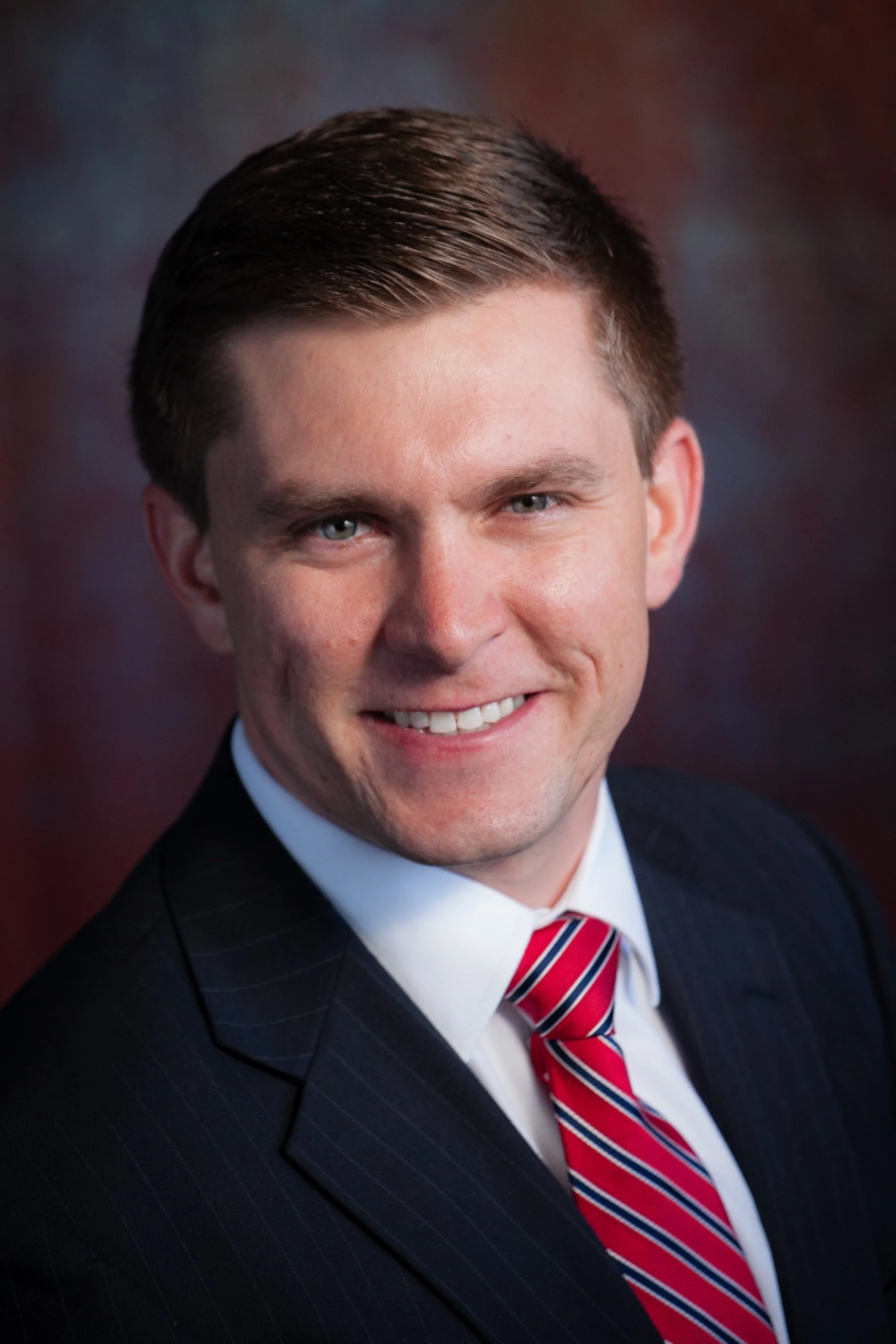
Dillon Pettyjohn
Could you please tell us a little bit about your background and how you got to DFW airport? Feel free to go back to your college years and what inspired you to get into planning.
From a formal education perspective, my undergraduate degree is in Strategic Studies. From a planning perspective, this type of background helps explore questions that need to be answered and consider things that may not have already been identified. Exploring those types of foundational things from the ground up has always been a passion of mine.
In this path, what's your favorite airport that you've managed?
They're all just so uniquely different. To me, that's the fun part about airports. Everything remains the same in the sense that aircraft are taking off and landing, being serviced, fueled, and so on. However, at the same time, they are all so different that you get a unique and cool blend. It's almost like when you think about how many different types of train stations there are around the world. Obviously, rail is very different than aviation, but it’s the same concept, and picking a favorite one is really tough for me.
Is DFW the third busiest in the world now?
For both passengers and operations, traffic fluctuates slightly each year. But yes, DFW is one of the busiest and most connected airports in the world, serving approximately 87 million passengers a year in 2025. When you think about it, what does that mean? How do you visualize that? It's in the order of magnitude of 250,000 people a day.
And before DFW, what city were you in?
I bounced around a lot for the Department of Defense for the Air Force involving 4 states and several other countries. I've got to work around the world and have been really lucky to have that type of breadth of experience.
What current initiatives do you think are taking place that are having the greatest impact in our region not only that you're working on, but that you would like to highlight for DFW as a whole?
When we think about it from construction projects alone, we've got 198 to 205 projects at any given time—and that's just on the construction and development side of the house. To hit a couple of the high ones, I think first and foremost is the terminal expansion program. Ensuring we have the gate capacity to keep things moving smoothly for everyone, whether local travelers, those passing through, or flying in from across the country or around the world. With the expected traffic volume, we must ensure our infrastructure can keep pace.
So that means the Terminal C renovation, as well as Terminal F and the Terminal C and A piers. That creates our capacity expansion program. It has many great things in it. It's about how we rebuild the terminals for our passengers. Whether it’s the local passenger who wants to have the best experience coming from their car or from other forms of transportation into the airport, experiencing our great concessions and other amenities that we provide, ensuring that their flight is not delayed because the aircraft can't reach the gate. I believe our expansion program is a key part of what we're doing to ensure we're ready for the future.
The second one that's pivotal for our local traveling public and customers is the International Parkway Program, the main road through the airport. For the past 50 years, it had left-hand exits. So, to get to any of the terminals, you were going in and over in a way that’s not so intuitive. And for years, we’ve wanted to do something different, to ensure that we can better facilitate local traffic getting to and from the airport more efficiently. Converting the Terminal Flyover Bridges to right-hand exits will be a more efficient way to get people to and from the terminals. We hope that makes the journey even smoother and more enjoyable, and from a foundational initiative, I think that's so consequential to our local traveling public.
Could you describe the collaborative process between DFW Airport, TxDOT, and the surrounding cities? DFW's relationship with its region is unique since it serves 13 counties rather than a single city. What's been the most enjoyable part of this experience, especially when it comes to seeing the construction of new buildings and bridges?
I think both are really important. Foundationally, I really like your point about the cities. We’re in the center of the DFW metroplex, not just in the middle of a city, and we really believe in that. So, when you look at it, even from the way our organization is set up, we also have direct interaction with the owner cities of Dallas and Fort Worth. We also have a rotating mayor from each of our four host cities, who serves on our board. So, from an organizational perspective, we're interfacing with those cities and their constituents as our customers, because it is about the community. We also have team members who sit on various TXDOT and NCTCOG boards to make sure we're collaborating with these groups and receiving feedback from both directions.
When you think about how much road construction TXDOT has, there's always an active conversation of, "Are we putting in the capacity in the right spot to get it in and out of the airport in the future?” It's completely integrated. We don't see it as a "We're the airport and they are... (insert other entity)." It has to be that integrated approach, or the traveling public doesn't get the best-in-class kind of experience.
What's been the coolest from the time that I’ve been here is the innovative construction methods we have used. We just recently finished moving our Terminal F modules into place, using a modular construction approach. What that means is that we do a large amount of our terminal construction off-site and then actually move pre-constructed pieces of the terminal into place. This allows us to perform all the civil site fabrication simultaneously with the building's superstructure construction, in this case via steel. We then transport the steel into place, running the construction in parallel rather than sequentially. It really helps from a construction acceleration perspective and decreases the overall project timeline, among other things.
Are there any specific projects you would like to highlight coming down to the pipeline at DFW Airport that you've been involved with? What are short-term projects for the next 1-3 years, and what is the long-term vision for the next 10 years?
Starting with the short term, we have to remember the length of time it takes for some of these things to come to fruition. It’s been a generational effort to achieve some of these outcomes. Terminal F, I think, is one of the best examples of that. It's taken us, our airline partners a long time to become comfortable with what this terminal design should look like, its functionality, and, of course, how to deliver it. So, it's a pretty exciting thing in the short term, that in a few years we're going to have a brand new terminal on the airport.
In addition, Terminal C’s renovation, is the opportunity not just to build a new terminal, but to design one that's even smoother and more intuitive for the customer. That really gives them that sense of place, being from the North Texas region, but at the same time, lets you access the world. We're excited to bring that to reality as both an infrastructure team and an airport team. As you can imagine, it takes the whole team to pull something like that off for our community and customers.
From a longer-range perspective, we continue to discuss two different, yet fundamentally important topics. The first question is, how do we better connect inside of the North Texas region? And then the broader conversation about connecting the world? So, when we talk about that, what does that mean to us? We are focused on enabling our local customers to get to and from the airport more efficiently and smoothly. To do this, we are looking at International Parkway and asking: "What are ways that we can make sure it doesn't become gridlocked, that it doesn't become a source of delay or a pain point to get in and out of the terminals?" I think you'll see a continued focus in the coming years on ensuring that terminal roadway access is smooth both in and out of the airport. A second item is the other means of transportation locally to and from the airport, whether that's rail or through these autonomous urban or mobility-type vehicles. All those types of changes are something we really want to make sure we're able to accommodate to make entry into the airport and exit as effective as we can.
When considering it from a global perspective, I believe we must continue to collaborate with our airline partners to ensure that Dallas and Fort Worth remain a focal point of international connectivity. When you talk about the opportunity to connect Asia to South America, or Europe to South America, or all of these other worldwide locations, that's part of what we do as an airport. We want to make sure that when people think about international airports and international connectivity, North Texas is considered a best-in-class worldwide leader.
When it comes to technology in the future, where do you see that playing in and what's the impact that you think it would have on DFW Airport?
I think we have some great examples of how technology has already begun to make an impact. We want to be on the leading edge and that we're able to keep evolving. A great example is how we collaborated with our TSA partners to eliminate the need for passengers to remove their shoes during TSA screening. That's a pairing of technological solutions to ensure we're equally safe and secure, while also achieving a positive outcome and a better experience. That is a significant difference for users.
It's things like that that seem insignificant, maybe individually, but as they add up, they're monumental in the overall journey that is your experience from leaving your house to the airport, until you board the aircraft. That's what we are always thinking about. We collaborate with all our federal partners to identify areas where various technology items can be leveraged, serving as a test bed or an opportunity for pilot projects.
We're currently working closely with all our partners to prepare for FIFA. And when you think about 2026, it will be a big year for the Metroplex. And what does that mean for us, as one of the gateways to the Metroplex? We're hoping to put the whole region's best foot forward. It's not just about the local games. It's about all those people who will connect through DFW to attend the national games. The airport is the first and last impression for these people, so it's a big deal to leave a positive impression.
Whether it's our international signage program and digital signs, or our efforts to ensure effective communication with passengers as they walk through the airport, we continue to advance our signage program to make it best in class. It's also the little things, like ensuring you can find a water dispenser so you can fill up your water bottle. It encompasses the entire spectrum of technology. And so, I don't know if you can "cherry-pick" and say, "Oh, this is the only important one," or "the next most important." I think you have to approach it collectively.